
Landscape Sketching
Sharing my process

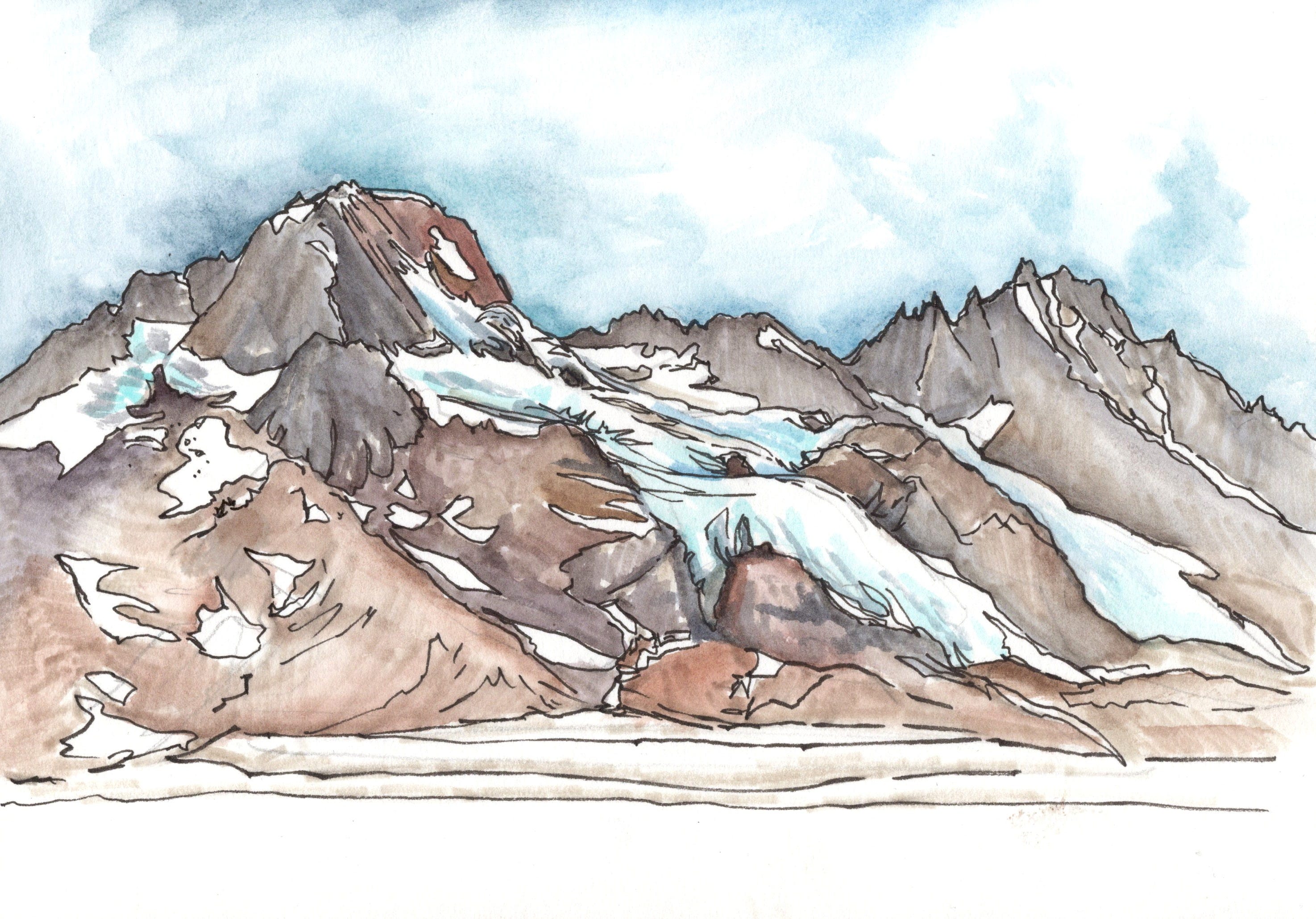
In my recent post about Backcountry Delights, I explained how I love sketching the landscape while I am immersed in it. At home in my studio, I luxuriate in zooming in on certain details in my drawing practice, but when I am outside and the weather is nice enough I love nothing more than to sit and draw the mountains around me and to take in the immensity of this place.
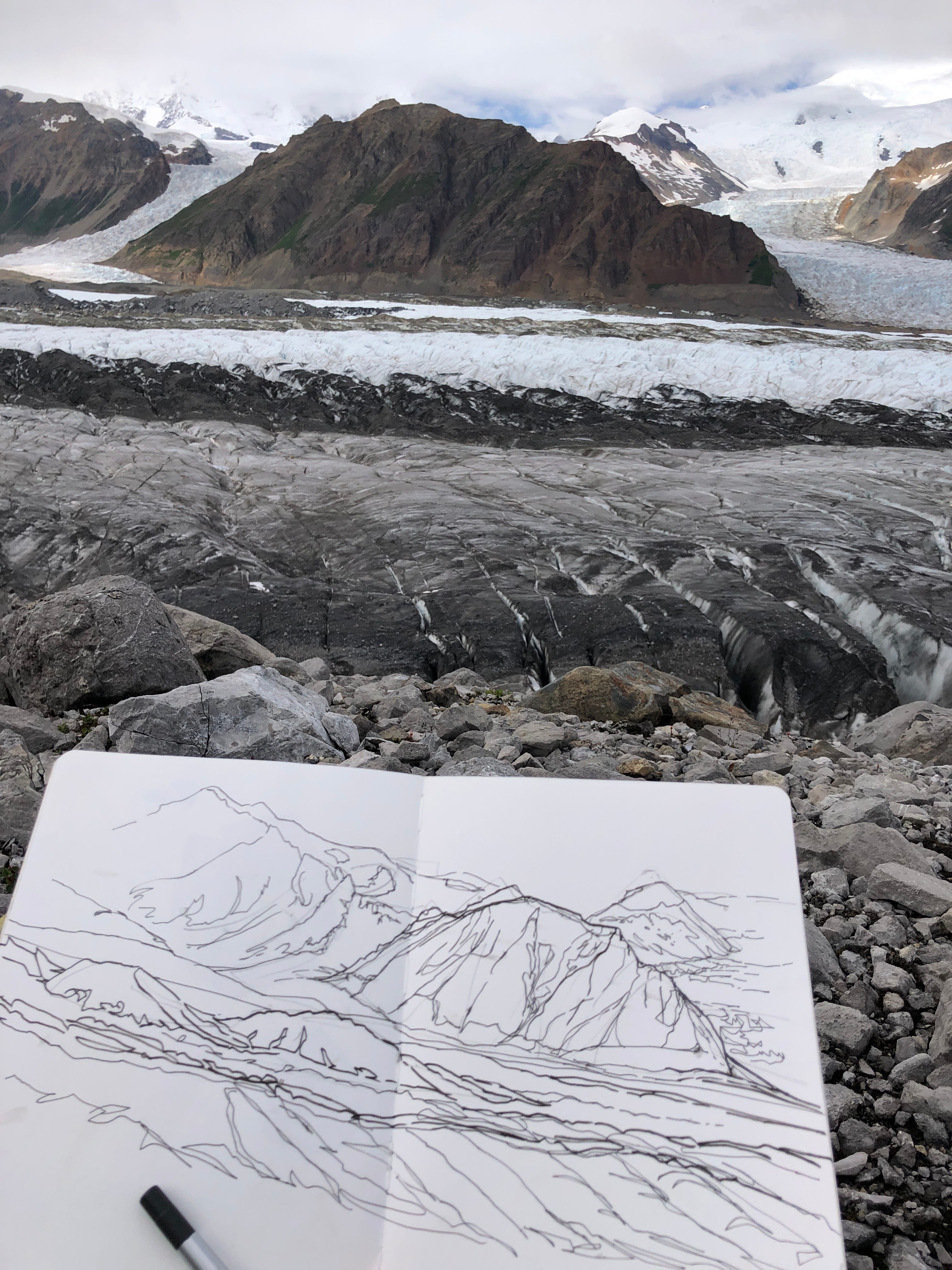
When I teach landscape sketching or want a more structured place to start I use a grid to look through and help measure things. This summer I practiced a more meditative approach. I decided it didn’t matter if things matched up perfectly. A sketch is my interpretation and I can decide what I want to include, what I want to generalize, maybe skip a ridge and exaggerate a gendarme. This made it more fun and playful for me. It helped me to let go of my perfectionism a bit. I think I like the sketches better too because they have more artist decisions in them.
In this internet space, we can’t go on a backpacking trip together, but I’ll take you with me as I sketch out this landscape. Please sketch along too if that is fun for you, or just enjoy the insights into my process. I’d love to see what you make.
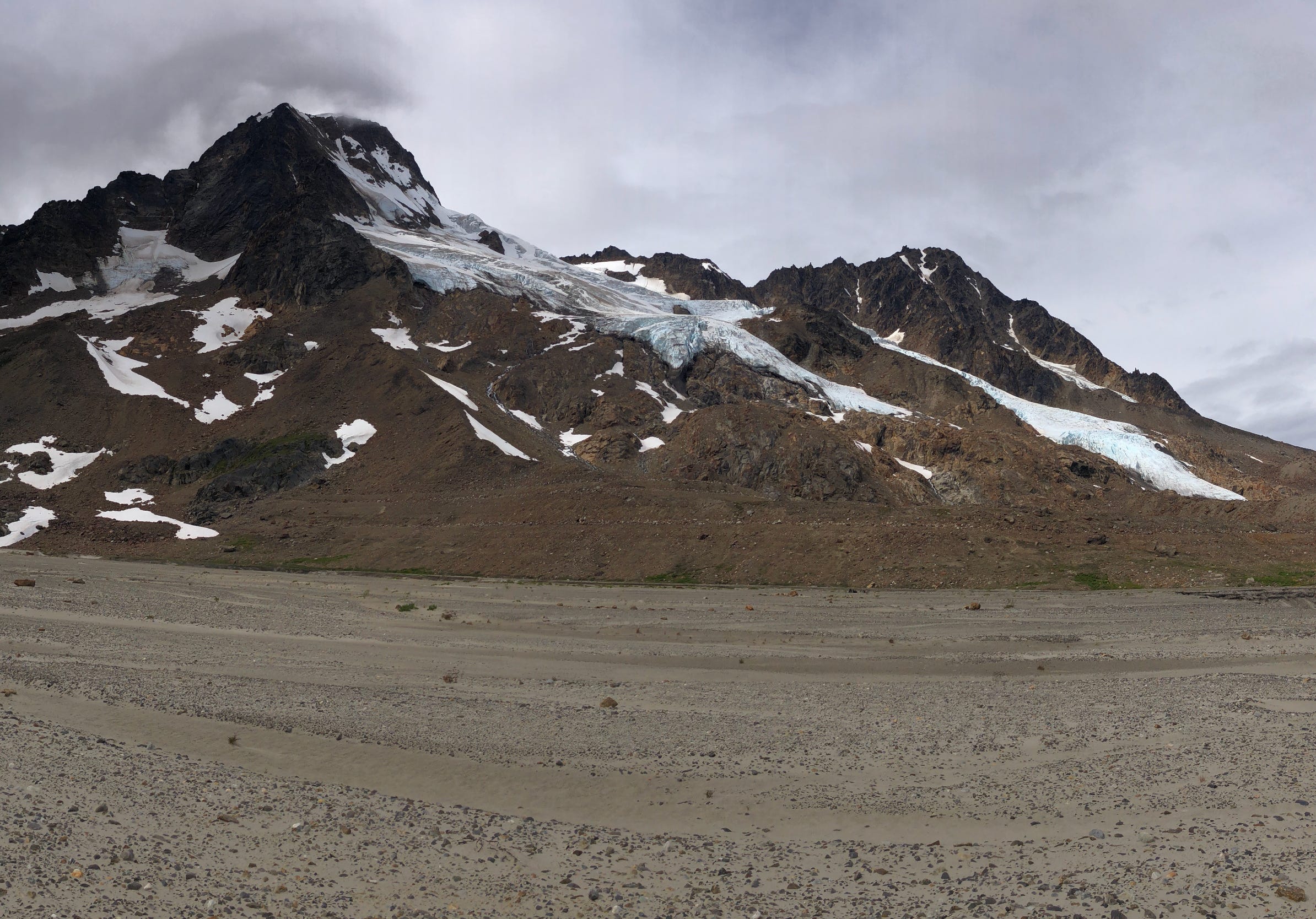
The place: These peaks hold some receding hanging glaciers that feed some beautiful alpine lakes right by the airstrip in the Chugach Mountains called “Iceberg Lake”. There used to be a big lake here dammed by a glacier. You can see the horizontal lines where the old lakeshore is in the middle of the photo. This picture is taken from the airstrip while waiting for our flight home. I thought I would get to make a sketch here, but it was pretty windy and cold, so I didn’t end up doing that and it was nice to step back into that memory now.
The first thing that I like to do is consider the view. What is important to capture? What is OK to generalize? I notice this landscape is all rock and some ice, there is pretty much no vegetation so I want to emphasize the variation in the rock color. I am most excited about the little rock towers on the ridges (gendarmes) and the way the mountains hold the shrinking glacier which cracks and spills over in places. I also think it is interesting to see the moraines and ridges showing the extent of the glacier when it was bigger. Zoom into the photo and see what is interesting to you.
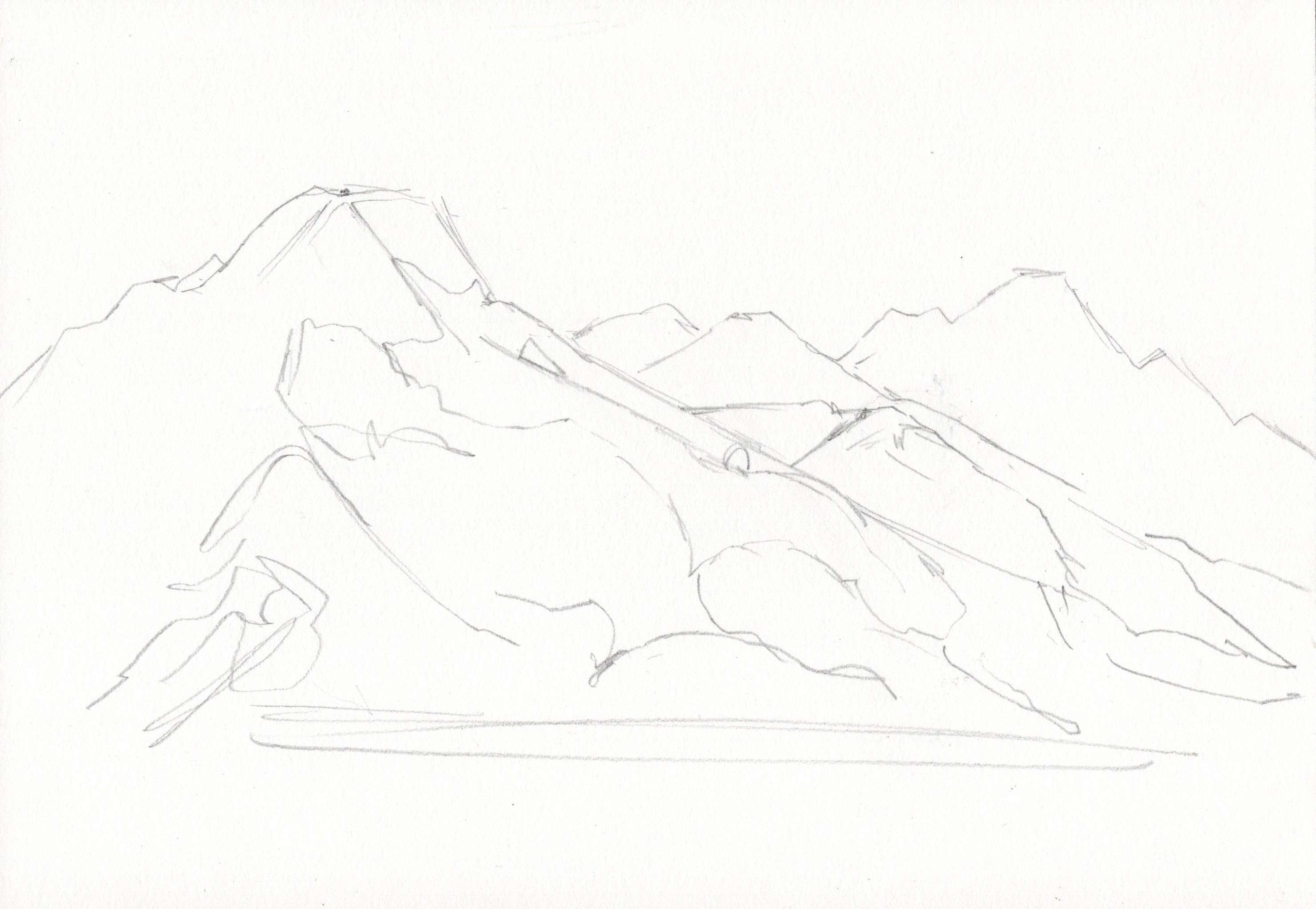
Once I think things through I begin with a rough pencil sketch. I use my pencil as a tool to measure angles and proportions. Instead of focusing on the tiny details I draw a straight line for the general shape of the ridge, and then I can add the little notches (and gendarmes) later.
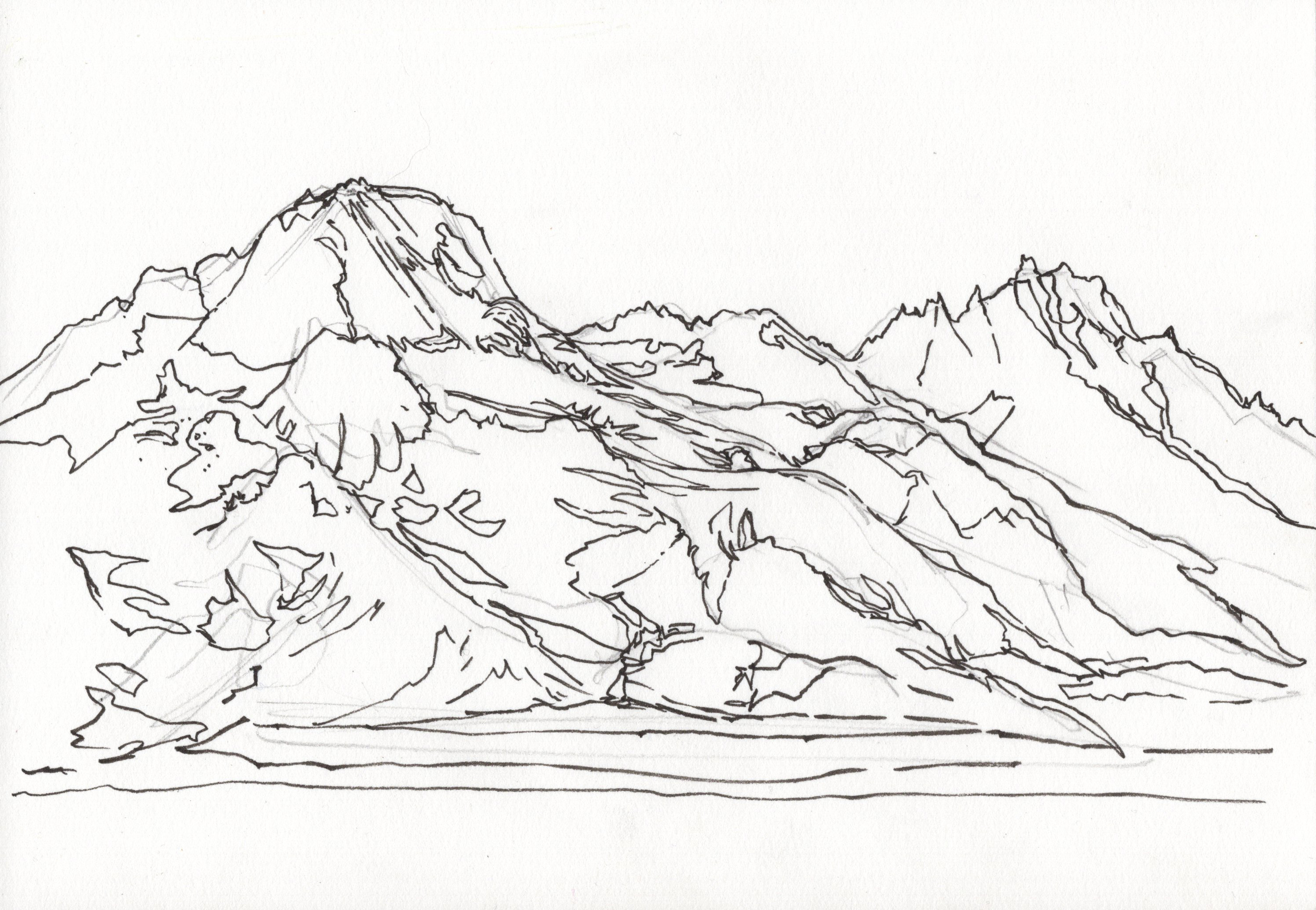
I go over the pencil sketch with pen. This is where I get to pay more attention to the little details and shapes. Since I have a basic framework marked out with the pencil I can notice all the tiny notches and cracks. Not everything matches up perfectly, but that’s OK. I let things go and pay attention to the bits that are important to me. This is probably my favorite step. I get lost in the meditation of drawing and thinking about the landscape.
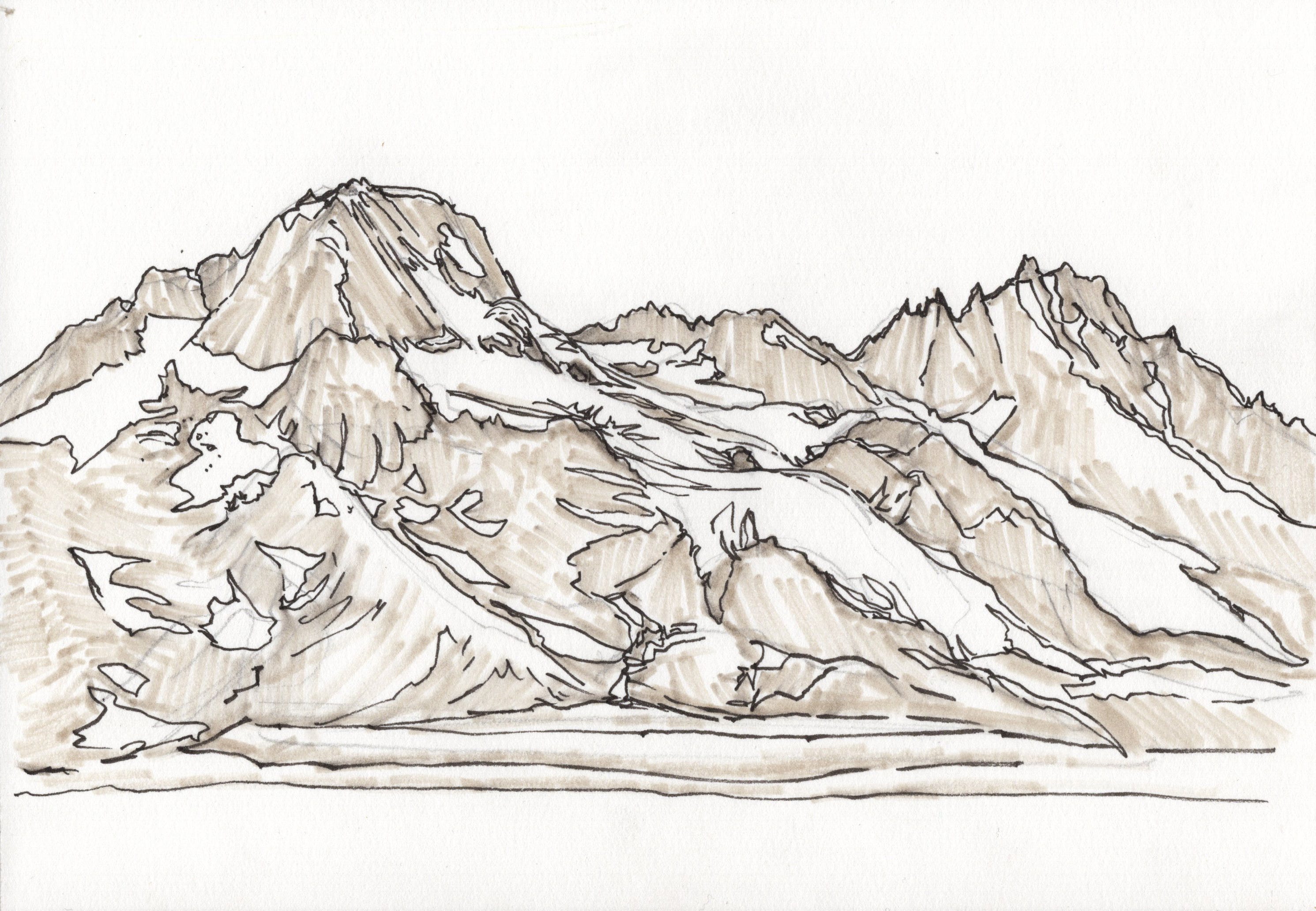
After I have my pen lines it feels a little bit confusing to figure out what is snow or ice and what is rock. Even when I’m not sketching glaciers I sometimes like to add in some value and shadows next. Here I used a gray pen to mark the rock in the landscape which makes the snow and ice more noticeable. I tried to make directional marks with the gray pen to show the structure of the rock.
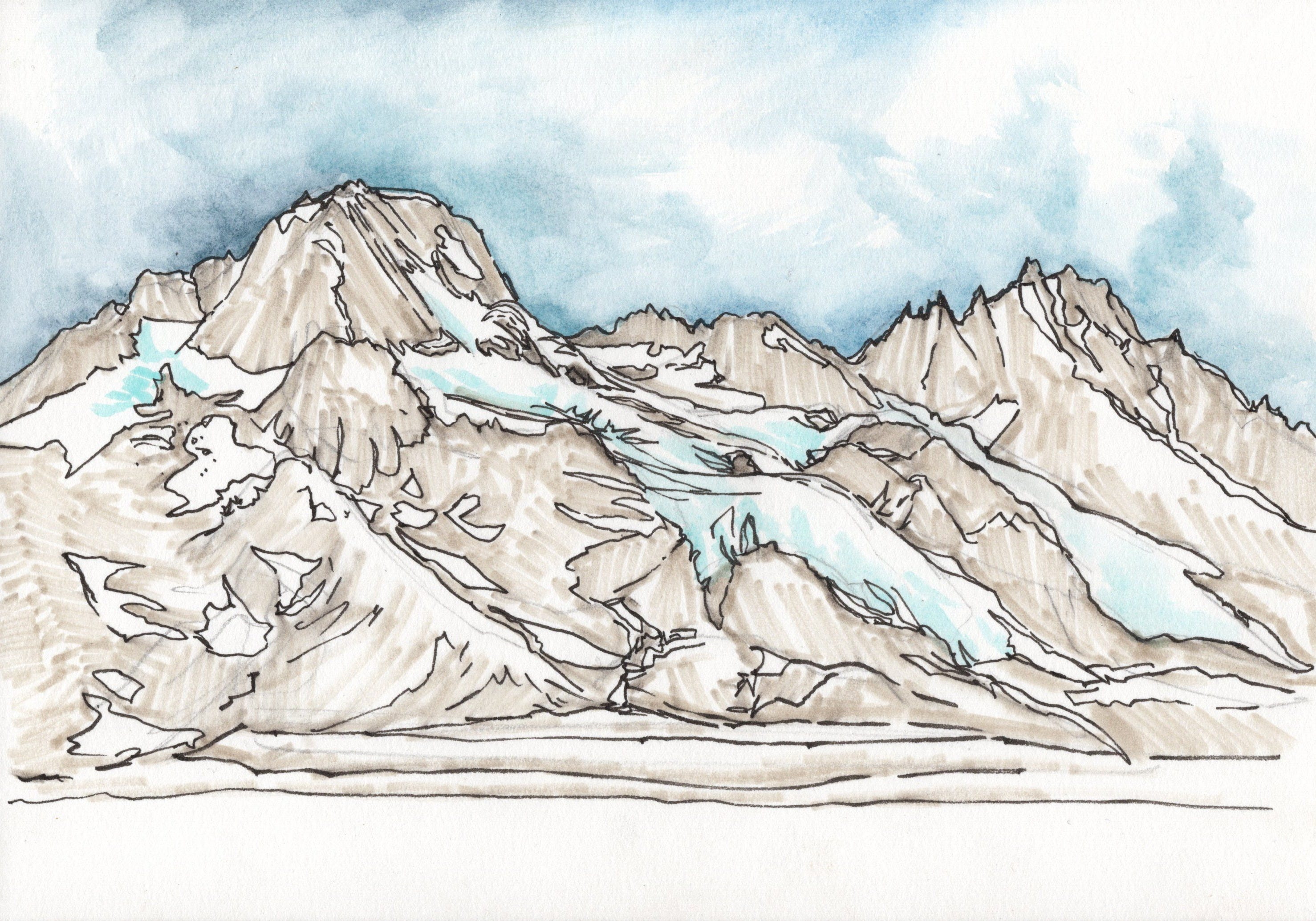
Now I get to add watercolor! I usually start with the sky since it is the farthest away and because it helps to situate the mountains in the world. Then I added a bit of blue in the glacier ice. I work light to dark and want to keep the whites in the snow and the ice so they reflect the white of the paper and sparkle in the finished sketch. I often finish a sketch here, sometimes with just the lines and the sky painted in.
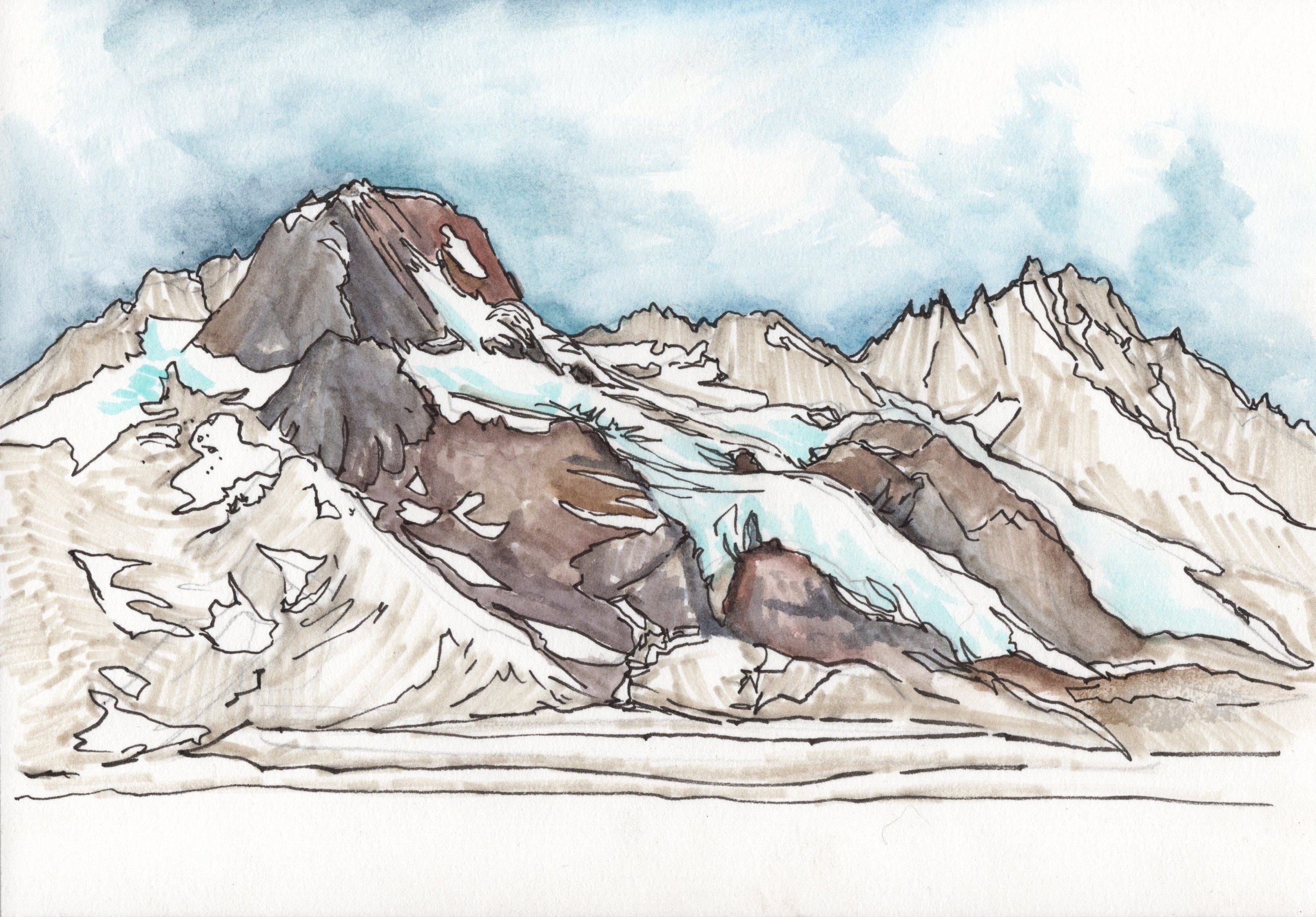
Here I decided I had time to paint in some of the rocks. I like the way the rock color goes from warm brown to more cool purple-gray so I started playing around with those different colors while painting in the areas. I also used some of the gray marker lines to guide my painting.
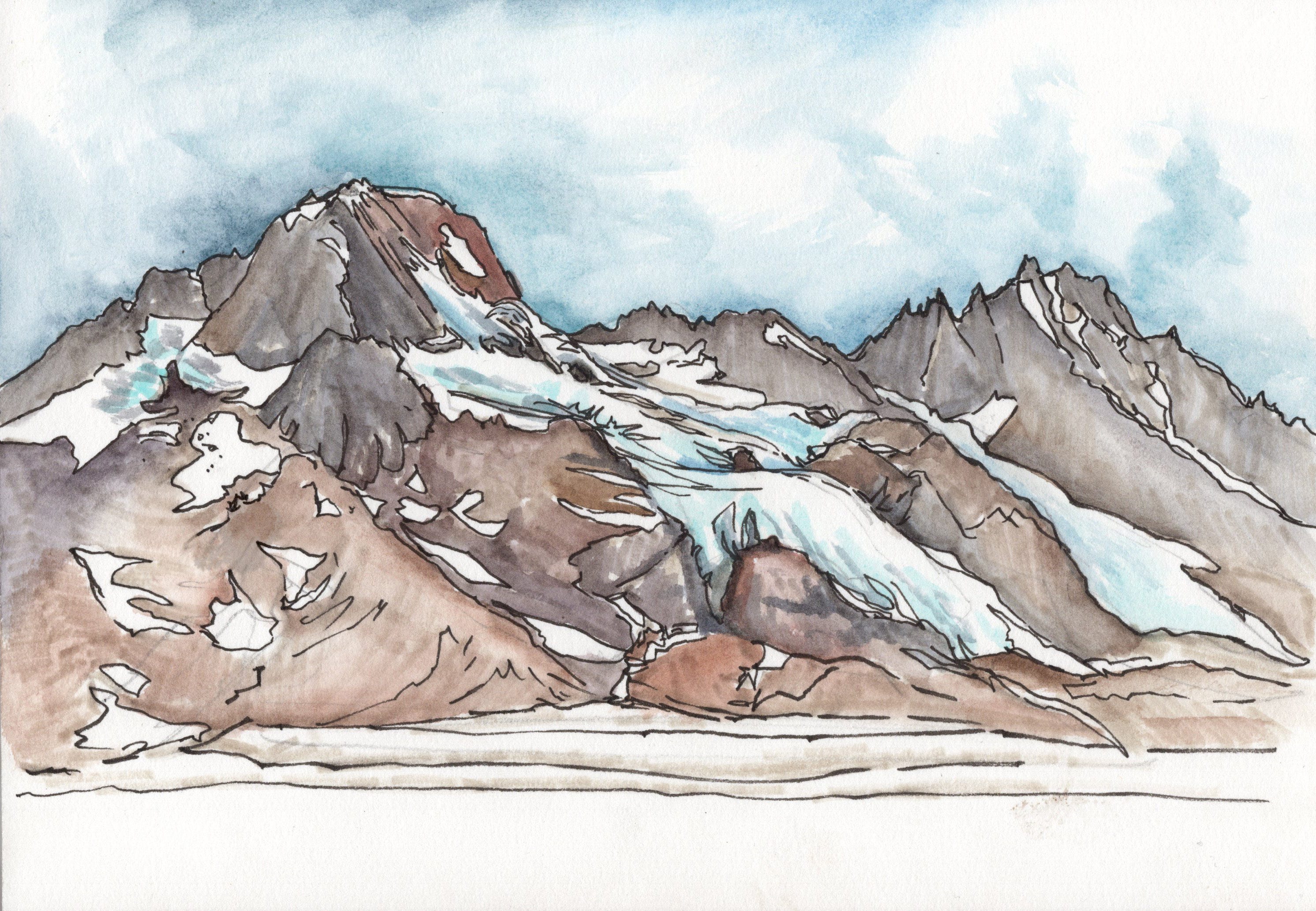
I continued along filling in the rocks above the old lake levels. I decided to stop my sketch here. If I had more time or another day I might add more detail or some information about what is going on in the foreground. This sketch captures what I was interested in and didn’t take me too long to create. It would be a valuable tool to take back to the studio and work from.
I also think sketches have a nice life of their own and even though I did this as an example from a photo with you, I felt like I was back in that place and the process brought me back to the week we spent at Iceberg Lake in August.
Let me know what you think. Did you sketch along with me? Do you have any questions that I didn’t answer? What do you like to do differently when sketching a landscape? Did this give you an idea for something you want to try?
Happy sketching.
Fantastic to see your artistic process, thanks 🙏 I have never got to grips with sketching landscapes, they’re just too big somehow in my head, so it’s useful to see your process here.
Hi! Great turorial. Thank you so much!
Can you describe the steps you used, or maybe another tutorial, to create the sky here?